

Sitting dormant on the west side of Manhattan for the last 20+ years, the High Line is a former elevated freight rail line that carried goods in and out of the west side of New York City. Several groups of activists lobbied for and eventually gained support of the city to preserve the infrastructure and turn it into public space. The first phase opened this past June and has been an immense draw for the area.
History
Paraphrased from to the High Line History Page:
It began back in 1847 as a ground level railroad. With over 105 crossings, it became a dangerous enterprise that resulted in many deaths over the next 80 years. In 1929, the city and state decided to elevate the railroad in areas and bury it in others. The 13 mile project cost over $150 million dollars, which is equivalent to $2 billion dollars today.
The line travels through the center of blocks to avoid creating negative conditions that an elevated railroad would cause traveling over streets. It connects directly to and in some cases goes inside the factories. Goods could come and go and never disrupt street-level traffic. In the 1950s, the exploding growth of interstate trucking began to cause declines in rail traffic. Ten years later, the southern-most section of the High Line is demolished. In 1980, the last train runs on the tracks.
During the 29 years of abandonment, groups of residents and landowners advocated for demolition as well as saving. After several city resolutions were passed advocating for the reuse of the High Line, a competition was held looking for ideas on how to reuse the crumbling infrastructure. Over 720 teams submitted entries. After the city took ownership of the line in 2005, and groundbreaking and construction period followed before the opening this past June.
The project was designed by James Corner Field Operations and Diller Scofidio + Renfro and construction on phase 1 of the park cost around $172 million public dollars to build. This investment into the community has resulted in more than 30 different projects being proposed or constructed.
The Visit
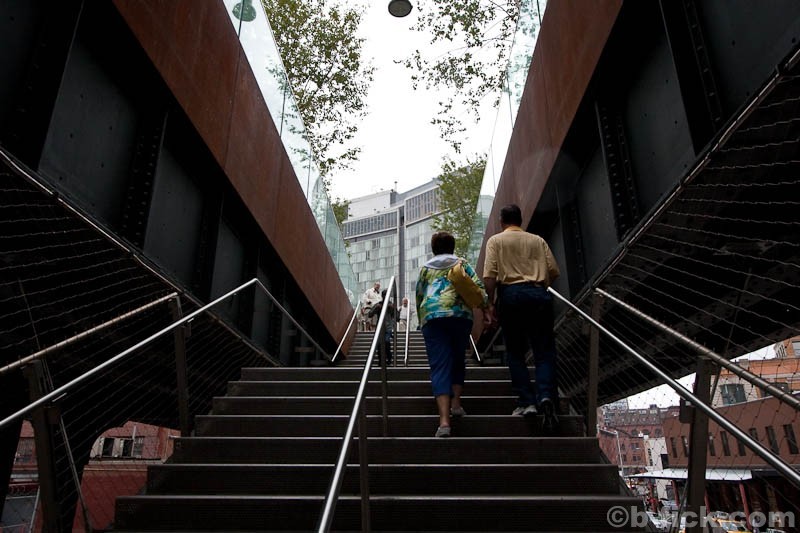
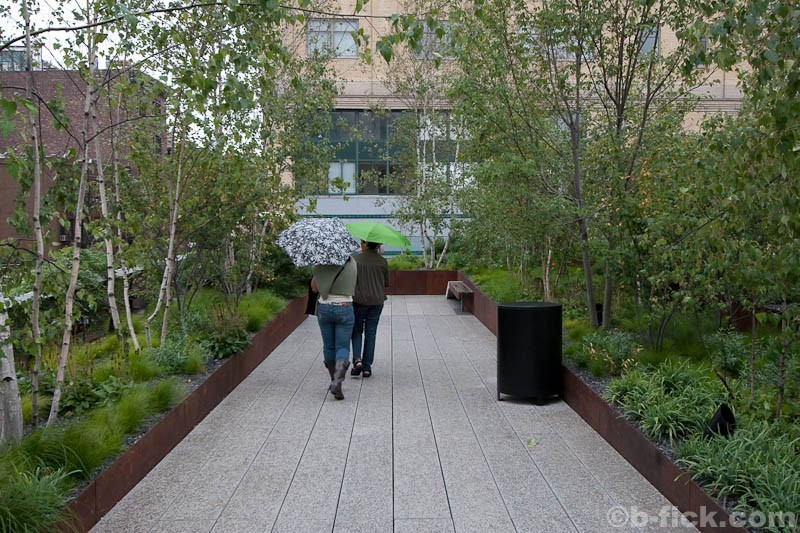
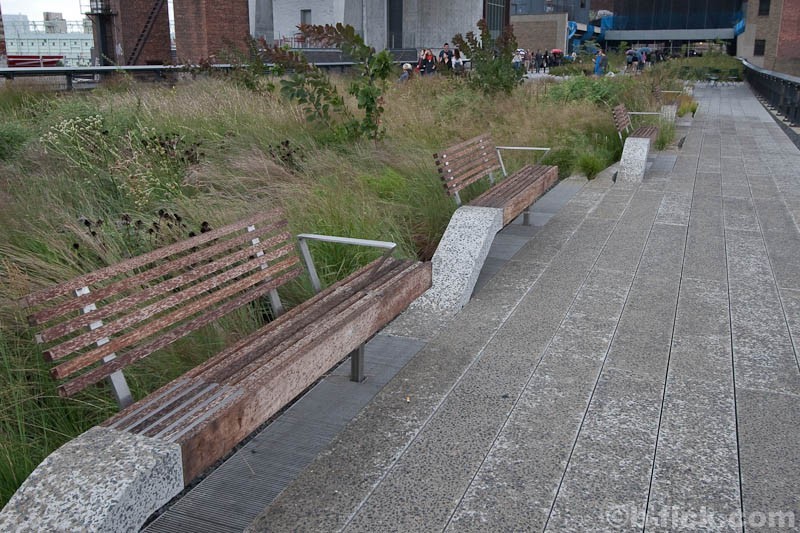
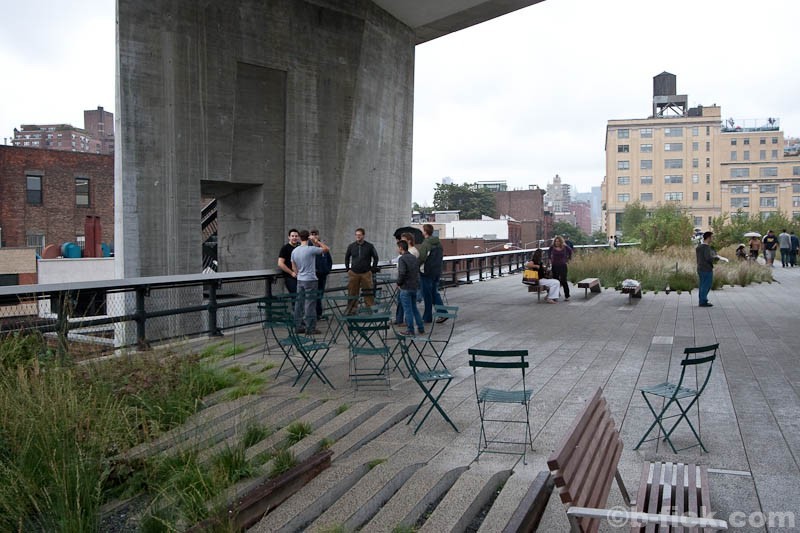
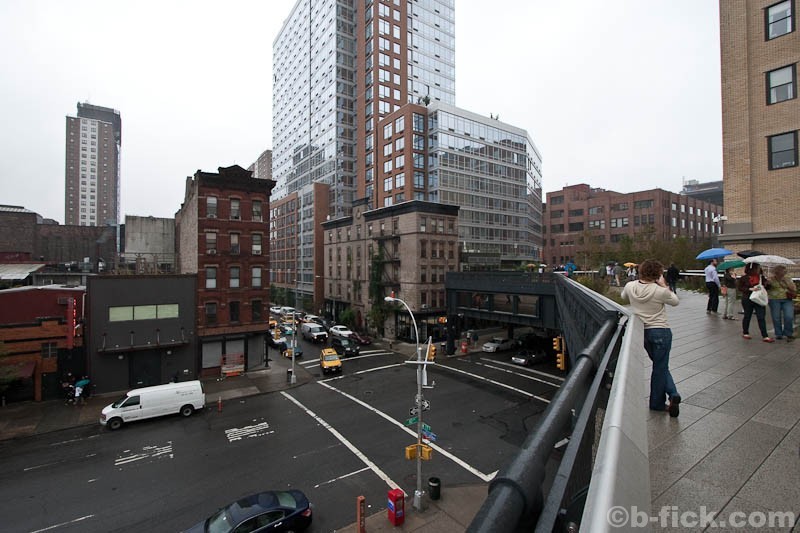
We headed toward the High Line from the east, approaching it from 14th Street. The meat-packing district seemed lively even though it was rainy weather. We walked down to the Gansevoort stairs and ascended up into the project. The greenery was lush and had a nice relationship to the concrete pathways. Although most people there were doing the same thing I was doing, there were a few groups having lunch in the covered areas and just lounging about.
Integration with Context
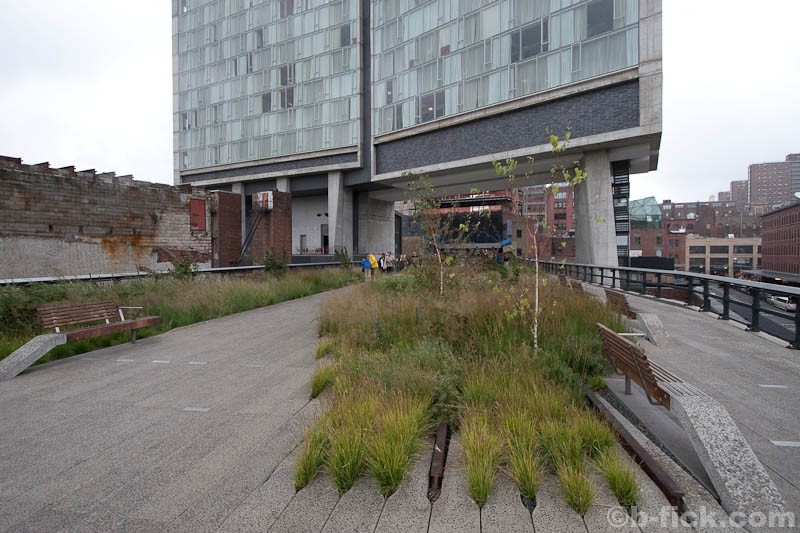
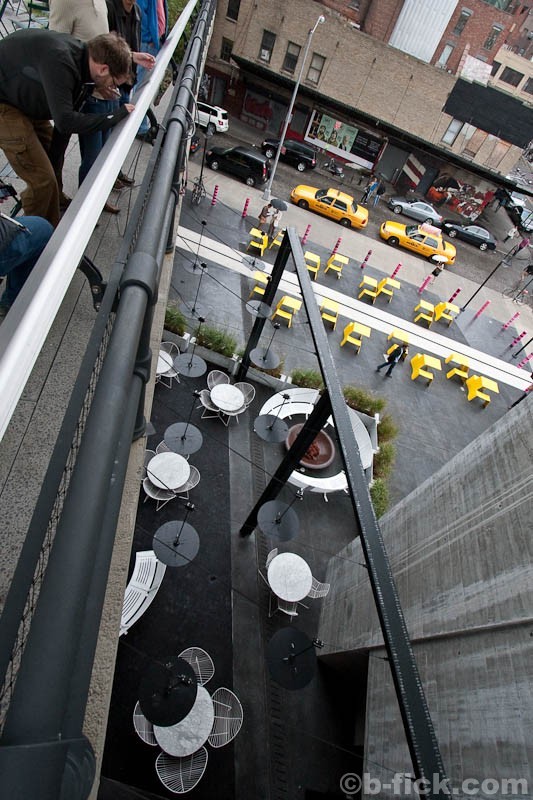
The Standard Hotel rises up perpendicular to and over the High Line. Immense concrete stilts hold the hotel up above the park, creating a loose enclosure of sorts. The space below it is free of foliage, providing ample room for events. This is a theme that repeats itself as the the High Line continues northward.

10th Avenue Square
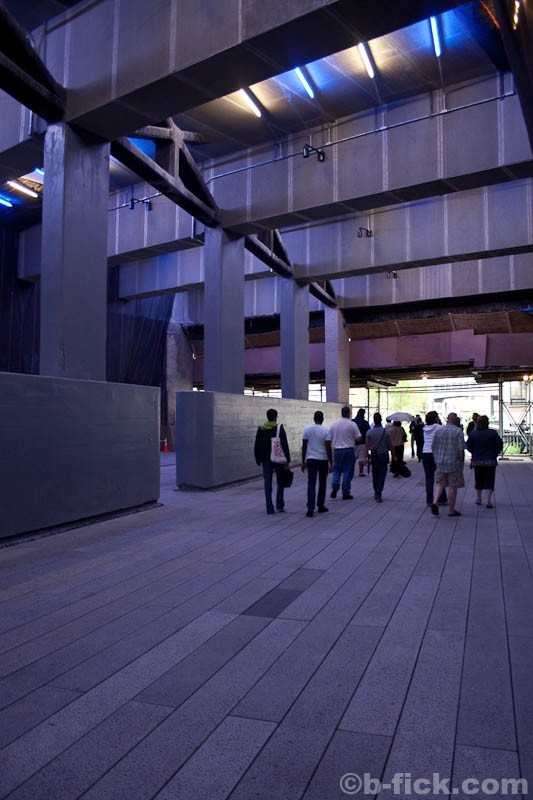
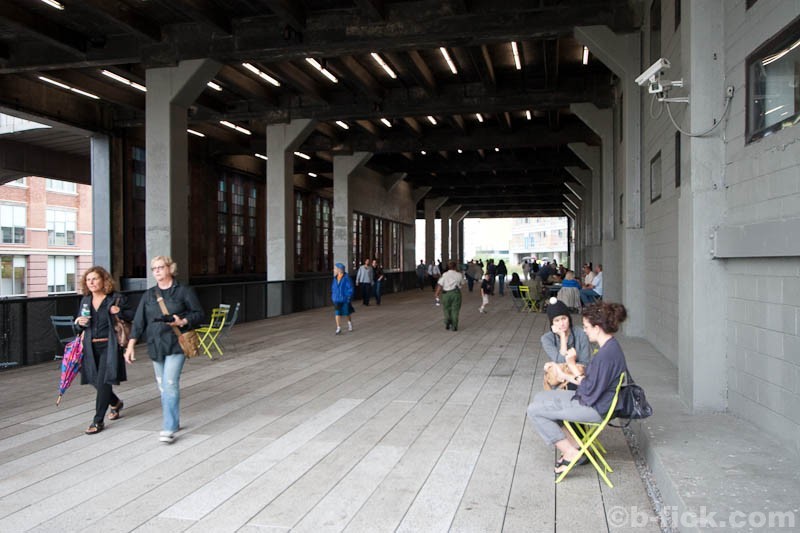
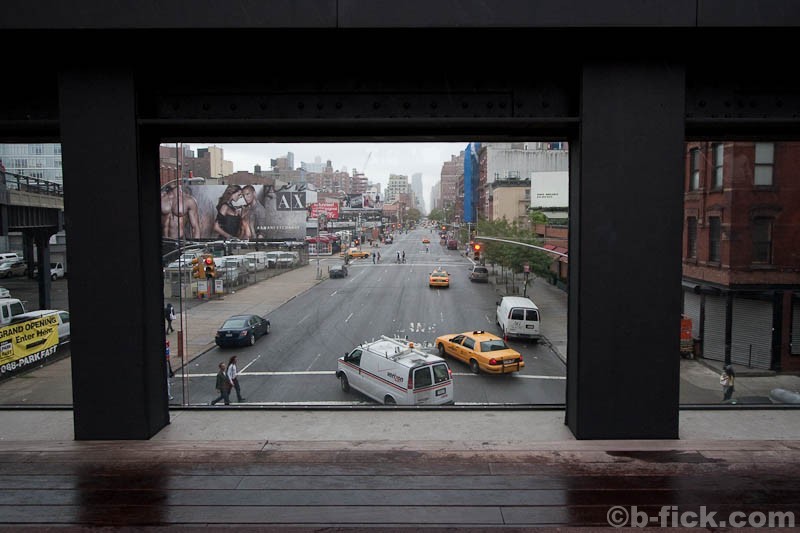
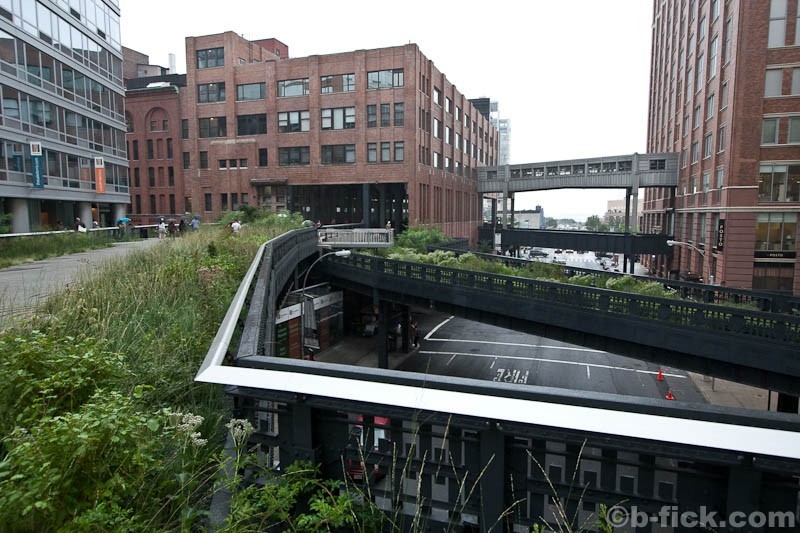
This section of the High Line houses a cool feature created by the elevated rail as it passes over 10th Avenue diagonally. A large footprint of extra structure without rails allowed the designers to carve out a stepped theater inside of the structure. Large windows cut into the street face lets patrons of the park sit down and watch traffic from a rare vantage point. Getting right up next to the windows lets you “inhabit” the street and traffic. From a material standpoint, this area is built of dark wood planks, as opposed to concrete and wild grasses that dominate the other parts of the High Line.
Overall, it is an excited park to inhabit and experience. A rich material tapestry and deep design strategy creates spaces for just about anything imaginable, and it is all done on a obsolete piece of infrastructure slated for demolition. This kind of investment serves to enrich communities and it shows in the case of the High Line.