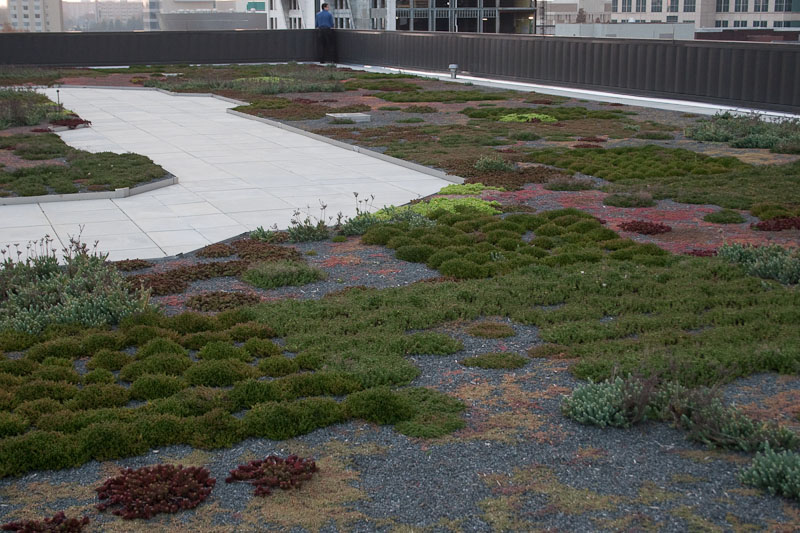
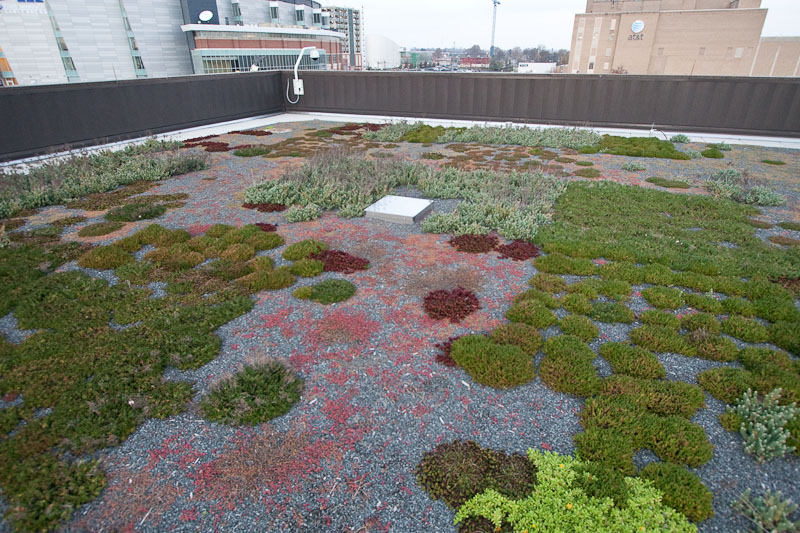
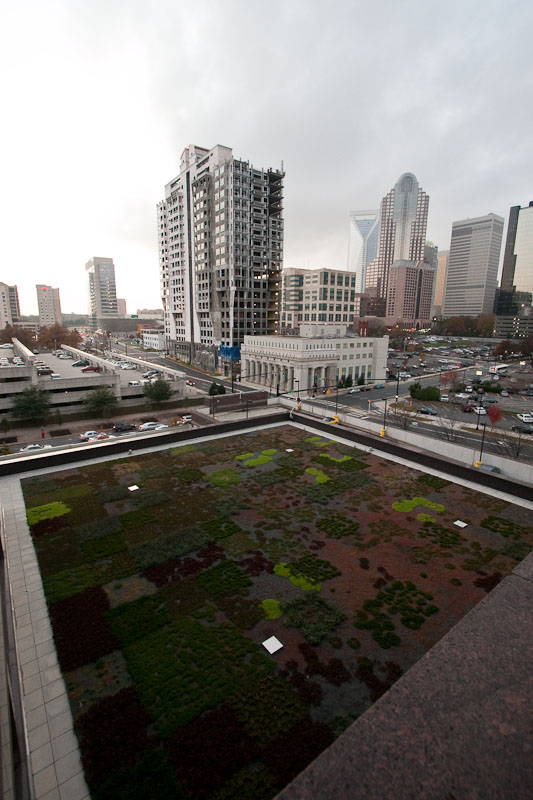
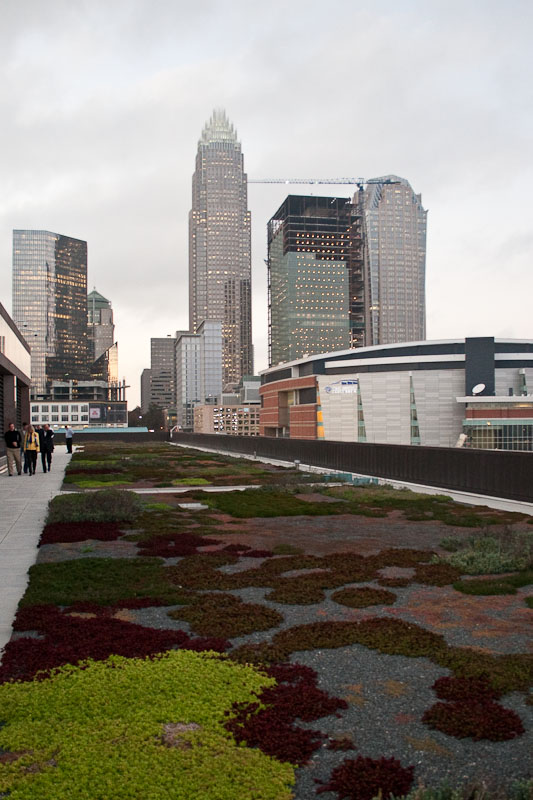
When it came time to replace the aging roof on the 22 year old Federal Reserve Building in Charlotte, they made the choice to install a green roof. That decision was based upon a careful analysis of the cost of the retrofit and additional life cycle cost of then maintaining it. The resulting project, is an encouraging foray into practical green design right here in Charlotte.
REI Engineering, the local firm who designed the roof system, recently gave a presentation on their experience designing, permitting and installing the system. For them, selling the client on the benefits of a green roof was easy. This was primarily due to the clarity of the economics involved. After all of the studies and pricing exercises, it was concluded that the green roof system would only cost 25% more than that of a typical roof, yet it would be expected last approximately twice as long. When looked at from the perspective of life-cycle costs, it is a no-brainer. From there, following some minor difficulty getting through the permit process, the project was executed rather smoothly.
A few points about the installation:
- In preparation for the living components of the roof, the surface was waterproofed using high quality systems compatible with the substrate.
- The newly installed waterproofing systems was analyzed using electric field vector mapping to ensure integrity.
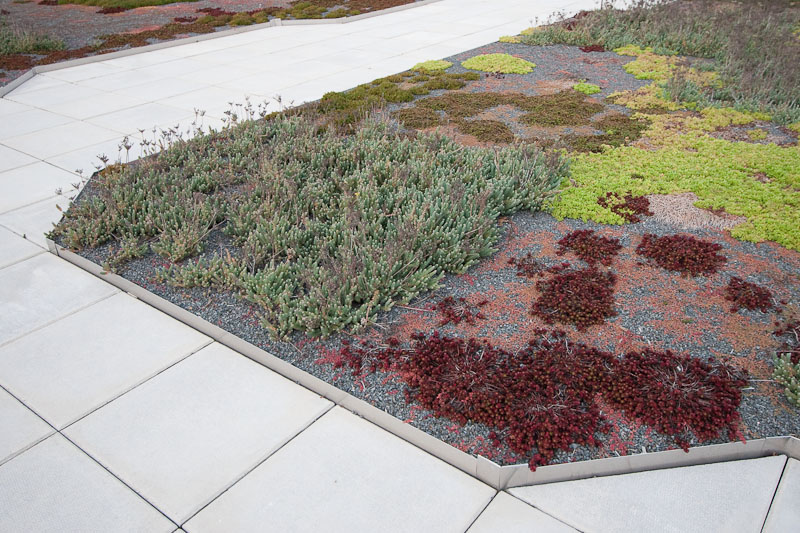
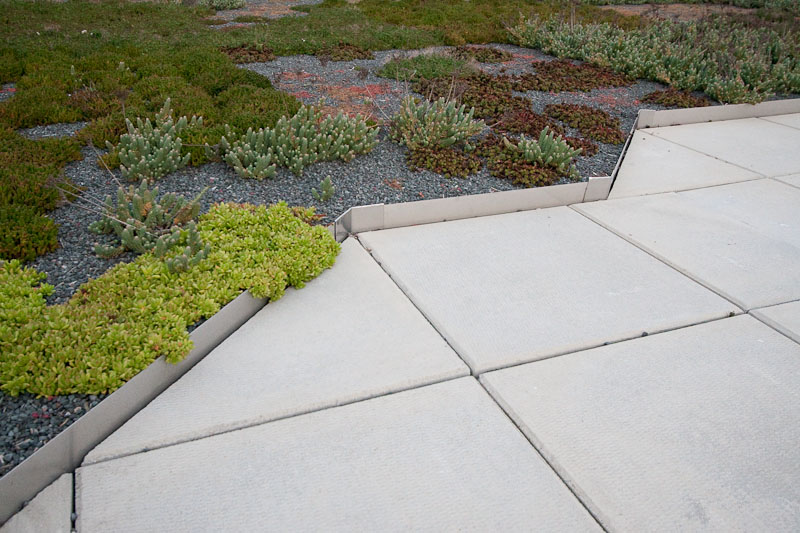
- Paver walkways were laid out around the perimeter to allow access to any parapet roofing details.
- The soil used was specially designed to be heavy enough to stay on the roof while it established itself.
- A variety of low-maintenance sedums were planted as cover, ensuring that whole sections would not die off.
- The most accessible roof was designed to accommodate an exterior kitchen for entertaining in the future.
- Because all of the critical waterproofing membranes are shielded from harsh conditions (UV), they are more reliable and will last longer.
The roof currently is around a year and a half of establishment. Some of the sedum varieties have died off while others have flourished. Overall, it is nice to see some building owners taking the initiative to explore and benefit from this technology. It will be interesting to see how the plant cover looks when it is fully established and what benefits the client sees.